

Types of Foundations
Basements, crawl spaces and slabs are the three foundation systems. In some coastal areas, it can be common to use posts that the house sits on. With any type of foundation, there is potential for cracking and damage from the soil surrounding the foundation from continuously freezing and thawing.
Slab
Slab is an easier style to build. It takes short preparation time and little labor to pour concrete into a prepared form. The slab is between four and six inches thick with a four to six inch layer of gravel beneath. A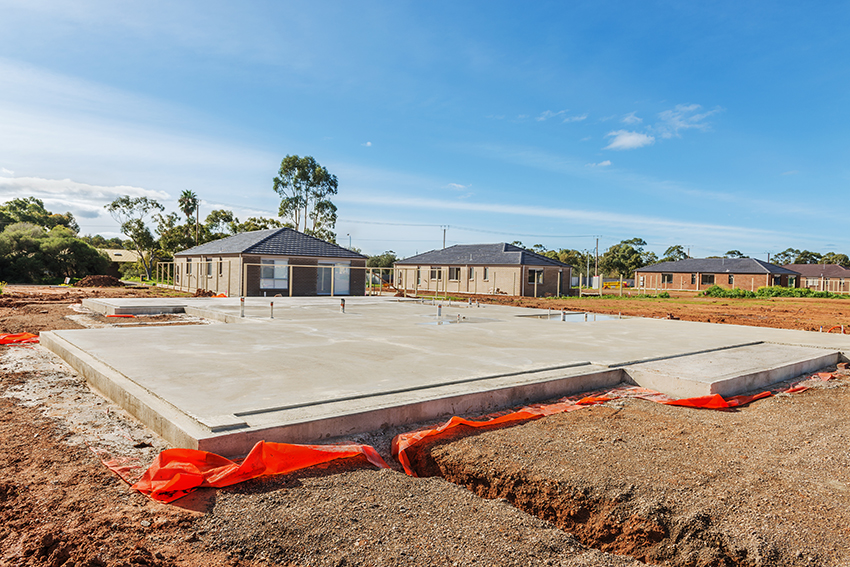 sheet of plastic lies between the layer of gravel and concrete to keep moisture out. Wire mesh is used to reenforce the slab.
This type works well in warmer climates. In colder climates, the ground will freeze in the winter and the freezing and thawing between seasons will cause the slab to shift. To prevent shifting, concrete beams are formed on both sides of the slab to penetrate the soil two feet. In colder climates, the beams need to be deep enough to extend beyond the frost line.
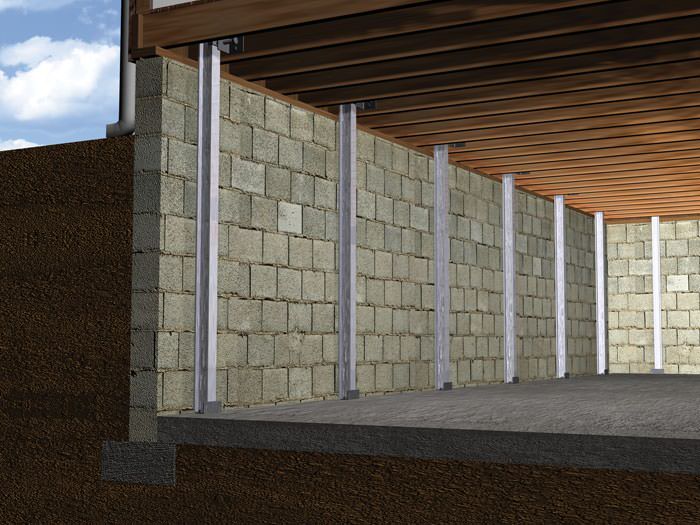 Basement
Concrete in poured into an eight foot hole to form the basements floor. Concrete or cinderblocks make up the walls. First the beams which are large blocks of concrete connecting the wall and the slab floor. The walls are formed next. After the walls, the floor slab is poured. L shaped steel reinforcing bars are used to keep the wall and the beams together. In colder climates, basement foundations are most efficient.
Crawl Space
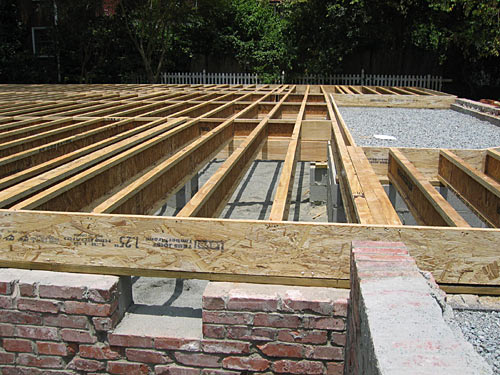
Craw space foundations are very common, They have a lot of advantages over basements and slabs:
- The crawl space allows the house to be off of the ground which is important in damp areas, or areas that are prone to termites.
- Ductwork and plumbing lines are easy to access.
The majority of crawl spaces are created with cinder blocks and a brick facing. A mason, or bricklayer, will adjust the height of the cinder blocks and bricks. In this case, mortar thicknesses are varied so that the walls maintain the same level the entire way around. A common problem with crawl spaces and basements is dampness.
For more information on types of foundations, contact one of our Team Members