
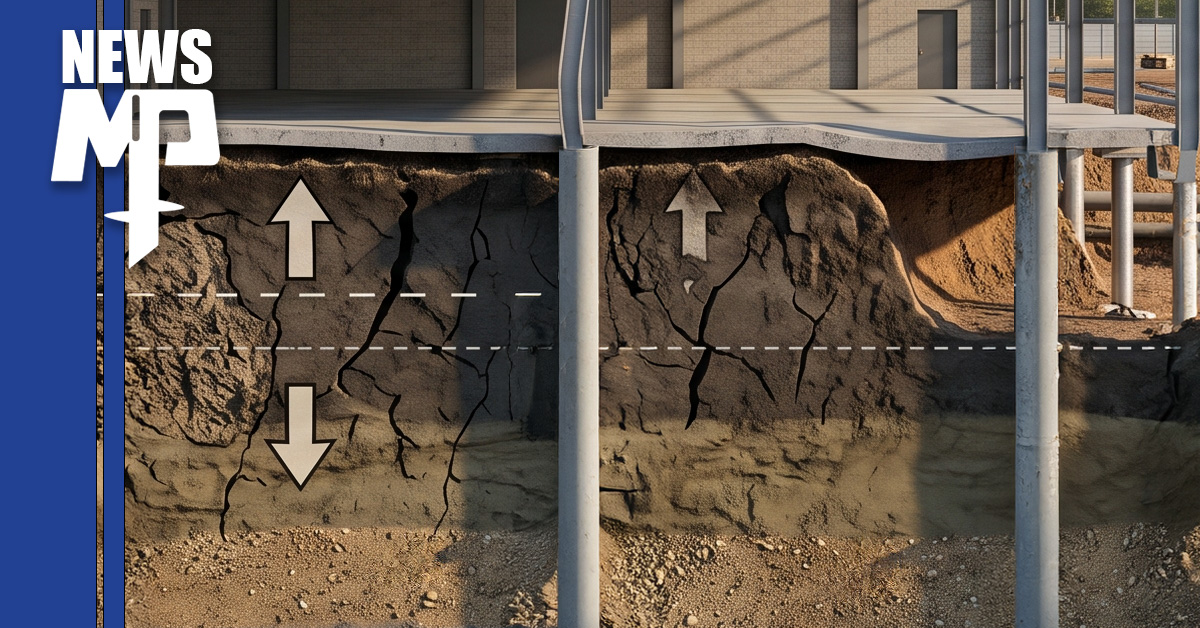
How Soil Movement Affects Foundations
How Soil Movement Affects Foundation Performance
The long-term performance of any foundation begins with the soil beneath it. Even a well-constructed structure can experience settlement, movement, or structural distress when changing soil conditions reduce the ground’s ability to support foundation loads. Understanding how soil behaves is an important step in selecting the right foundation solution for both new construction and foundation repair.
Why Soil Moves
Soils naturally expand, contract, and shift as moisture levels and environmental conditions change. Several factors can influence this movement, including:
- Seasonal wet and dry cycles
- Heavy rainfall or flooding
- Extended drought conditions
- Freeze-thaw cycles
- Erosion and poor drainage
- Expansive clay soils
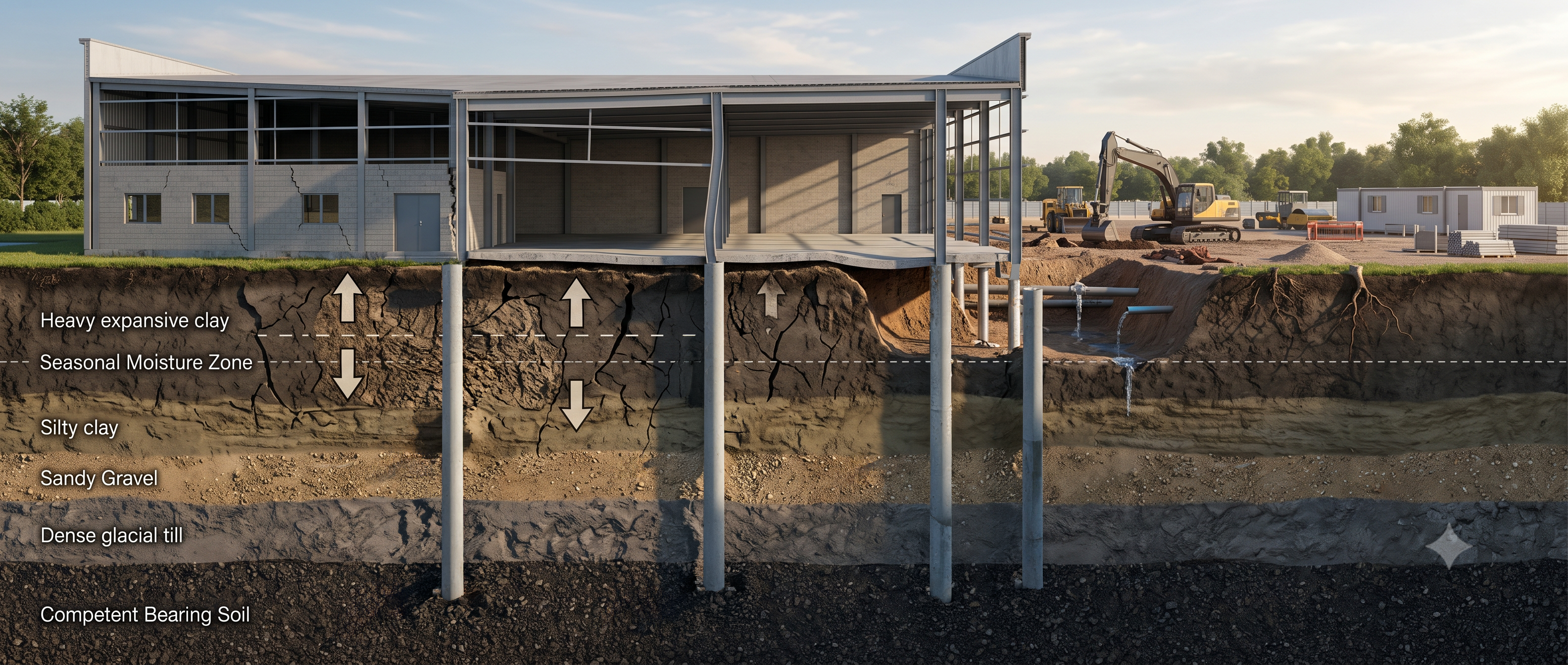
When soils absorb moisture, they often expand. As they dry, they shrink and lose volume. Repeated expansion and contraction can create voids, uneven support, and differential settlement beneath foundations. Over time, these changes may affect the stability of buildings, industrial equipment, utility structures, and other critical infrastructure.
Common Signs of Foundation Movement
As soil conditions change, foundations may begin to show visible signs of movement. These can include:
- Cracks in concrete or masonry
- Uneven or sloping floors
- Doors and windows that stick
- Separation around walls or ceilings
- Settlement around foundations
- Tilting or movement of supported structures
While these symptoms may appear gradually, they often indicate that the supporting soils have changed and should be evaluated before additional movement occurs.
Reducing the Impact of Soil Movement
Although soil movement cannot always be prevented, foundation systems can be designed to minimize its effects.
Deep foundation systems, such as helical piles and steel push piers, transfer structural loads beyond unstable near-surface soils into more competent bearing strata. This reduces reliance on soils that are most susceptible to seasonal moisture changes and settlement.
For new construction, deep foundations can improve long-term stability in challenging soil conditions. For existing structures experiencing settlement, properly selected underpinning systems can restore support while minimizing disruption.
Choosing the Right Foundation Solution
Every project presents unique soil conditions and loading requirements. Site evaluation, soil characteristics, structural loads, and project objectives should all be considered when selecting a foundation system.
MAGNUM® manufactures high-capacity steel foundation solutions for commercial, industrial, energy, transportation, utility, and foundation repair applications. Our products are manufactured in the USA and supported by experienced technical resources to help contractors and project teams select the appropriate solution for demanding site conditions.
Whether your project involves expansive soils, erosion, settlement, or difficult access, choosing the right foundation system begins with understanding the ground beneath the structure.