

Staying Competitive in Steel Fabrication
How MAGNUM manages changing costs while keeping quality, delivery, and customer needs in view
Steel fabrication has always required careful control of material, labor, scheduling, and transportation costs. In 2026, that work has become even more demanding. Steel prices have moved quickly, energy and freight costs remain uncertain, and higher interest rates can affect when customers move forward with construction projects. For MAGNUM, staying competitive means understanding those pressures early and making decisions that support the entire project, from initial costing through delivery and installation.
A Market That Keeps Moving
Recent industry data illustrates the pace of change. The Producer Price Index for steel mill products rose approximately 11.6 percent between April and August 2026. In a second-quarter survey by the National Association of Manufacturers, 83.1 percent of respondents identified rising raw-material costs as a leading business challenge, while 72 percent reported higher energy costs. These increases can move through purchasing, fabrication, and shipping before a finished product reaches the jobsite.
The broader economy adds another layer. Higher borrowing costs can slow projects or change their timing. Construction demand can also vary from one market to another. MAGNUM serves customers across commercial construction, utilities, transportation, renewable energy, industrial work, and foundation repair. That range of applications helps the company respond as activity shifts among markets.
Looking Beyond the Quoted Price
The lowest unit price does not always produce the lowest project cost. Before a project is quoted, MAGNUM evaluates material requirements, production needs, equipment, shipping, and potential field impacts. As a project grows, even a modest material reduction can create meaningful savings. In other cases, adding a production step or using different equipment may reduce labor, simplify installation, or improve the construction sequence.
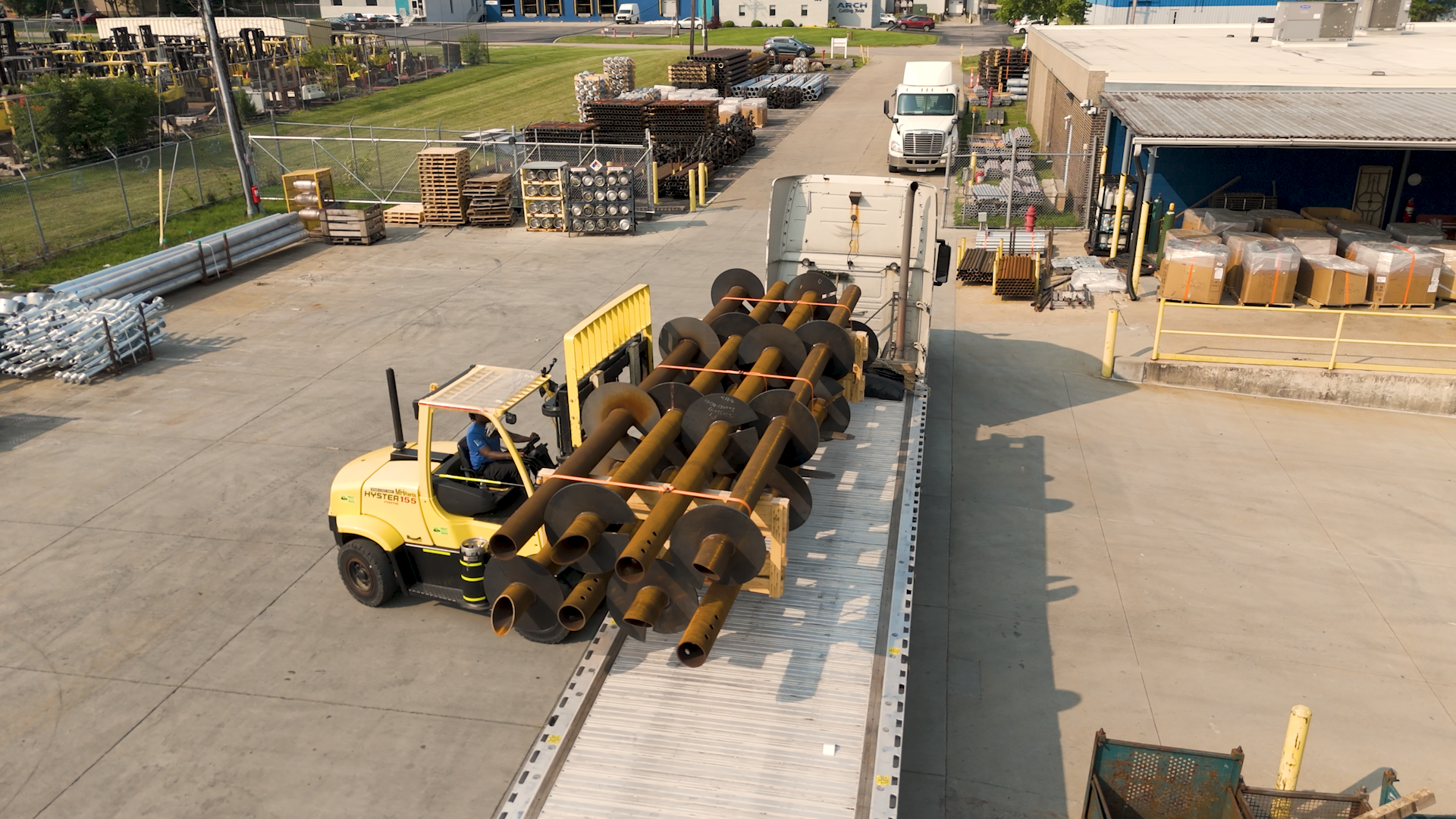
The right shipping sequence can reduce downtime
The objective is to provide the right product solution for the work, rather than force every project into the same approach. MAGNUM maintains an extensive product catalog, but many projects still require the team to examine how an existing product can be adapted or how a build-to-order component can address a specific need. That evaluation considers economy and performance together.
Coordinating Production With the Field
A competitive manufacturing plan also has to work outside the plant. Production sequencing and shipment schedules are coordinated with the customer’s field operations. A contractor may have limited laydown space, restricted site access, or a crew that needs material delivered in a specific order. Adjusting the manufacturing or shipping sequence can reduce downtime and help prevent material from arriving too early, too late, or in an order that complicates installation.
This coordination depends on regular communication among purchasing, manufacturing, project support, sales, and the customer. Forecast reviews and project-planning meetings help align material purchases, production timing, and delivery commitments. Purchasing decisions are informed by market trends, supplier lead times, and available opportunities to control risk while keeping material costs aligned with project budgets.
Productivity Through People and Process
Labor cost is only part of the productivity equation. Training employees, keeping skills current, and introducing improved manufacturing methods can increase output without sacrificing quality or safety. New equipment may help, but its value depends on how well it fits the product mix, the workforce, and the needs of upcoming projects. MAGNUM continually reviews where equipment, tooling, training, or a different workflow can remove unnecessary time and material from production.

Efficient U.S. manufacturing with reliable quality.
That same discipline applies to job costing. Comparing estimated requirements with actual labor, material use, and production results gives the team better information for future work. Small improvements become especially important when they are repeated across many components or large orders.
Quality and Responsiveness Still Matter
Customers ultimately depend on consistent products, dependable delivery, and support when jobsite conditions change. Each order moves through MAGNUM’s quality-control process before shipment. If a problem is identified, responsiveness and ownership matter. Construction can uncover buried obstructions, access limitations, or other conditions that were not visible during planning. Customers need a manufacturer that is accessible and prepared to help them work through those issues.
For MAGNUM, remaining competitive means combining efficient U.S. manufacturing with reliable quality, timely service, and professional integrity. Price will always matter, but the full measure of value is whether the product, production plan, delivery sequence, and customer support help the contractor complete the work successfully.
THE QUESTION
When market conditions change, what do you value most from your manufacturing partners: competitive pricing, product availability, consistent quality, dependable lead times, or responsive service?
We would like to hear how these factors influence your project decisions.