

What Causes A Foundation To Crack?
Foundation Cracks: Causes, Warning Signs, and Why Early Action Matters
The foundation is one of the most critical structural elements of any building—yet it is also one of the most frequently overlooked. Because foundations are largely hidden from view, early warning signs are often missed until damage becomes extensive and costly. Industry studies consistently show that foundation cracks are a leading contributor to property damage, structural instability, and long-term repair challenges.
The good news: foundation cracking is often preventable. Understanding the common causes and recognizing early indicators allows issues to be addressed before they escalate into major structural failures.
Recognizing the Warning Signs
Foundation distress rarely appears without visible clues. Common indicators include:
-
Horizontal or jagged cracks along foundation walls
-
Cracks near doors and window openings
-
Doors or windows that stick or appear misaligned
-
Bowing or bulging walls
-
Uneven or sloping floors
These symptoms signal underlying movement that should be evaluated immediately.
Common Causes of Foundation Cracks
Water Exposure and Poor Drainage
Water is the single greatest threat to foundation stability. Excess moisture—from heavy rainfall, flooding, plumbing leaks, or poor grading—can increase hydrostatic pressure against foundation walls. Saturated soils expand, placing lateral stress on concrete and leading to cracking and deterioration.
Effective drainage and proper water management are essential. Water must be directed away from the foundation to reduce pressure and prevent soil instability.
Soil Type and Soil Movement
Expansive and clay soils are particularly challenging. These soils expand when wet and contract when dry, causing uneven support beneath foundations. Expansion can push against foundation walls, while contraction leads to settlement—both of which increase the risk of cracking.
Understanding soil behavior is a critical part of foundation design and long-term performance.
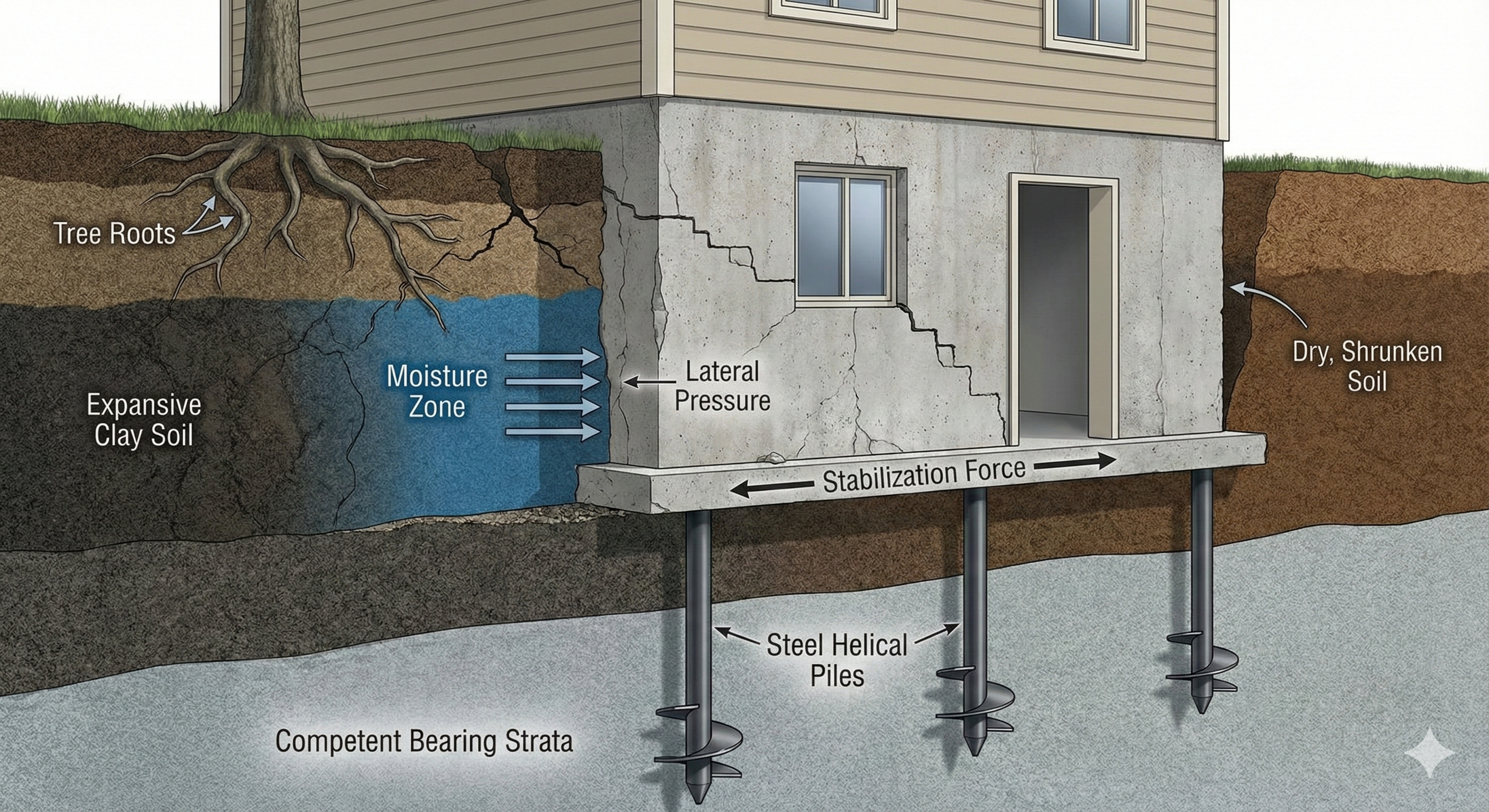
experiencing structural cracking.
Tree Roots
Tree roots can exert significant force as they grow and seek moisture. When roots encroach on a foundation, they can cause lifting, shifting, and cracking. Proper landscaping matters—trees and shrubs with invasive root systems should be planted well away from the foundation perimeter.
Hot and Dry Conditions
Extended periods of heat and drought can be just as damaging as excess moisture. Dry conditions pull moisture from surrounding soils, causing them to shrink and separate from the foundation. This loss of support increases the likelihood of movement and cracking, particularly in clay-rich soils.
Poor Foundation Construction
Inadequate site preparation, improper soil compaction, low-quality materials, or poorly designed footings can all compromise foundation performance. These issues often remain hidden until cracking appears years later.
The most effective prevention starts at construction—using properly engineered designs, professional installation, and high-quality materials.
Build and Repair With Confidence
Regardless of the cause, foundation cracks are a warning sign that should never be ignored. Early evaluation and engineered solutions are essential to restoring stability and protecting the structure.
At MAGNUM Piering, we understand the demands placed on foundations over time. Since 1981, our high-capacity steel piling systems have been engineered, manufactured, and proven to perform under challenging soil and environmental conditions. Our solutions are designed to transfer loads to competent bearing strata—delivering long-term reliability where conventional foundations fall short.
To learn more about MAGNUM® Piering products or to find a qualified installer, visit our website and take the first step toward a stronger foundation.
#FoundationCracks #StructuralIntegrity #SoilConditions #DeepFoundations #FoundationRepair #EngineeringExcellence #ConstructionQuality #MAGNUMPiering