Deflection of Helical Piles: What Load Testing Shows
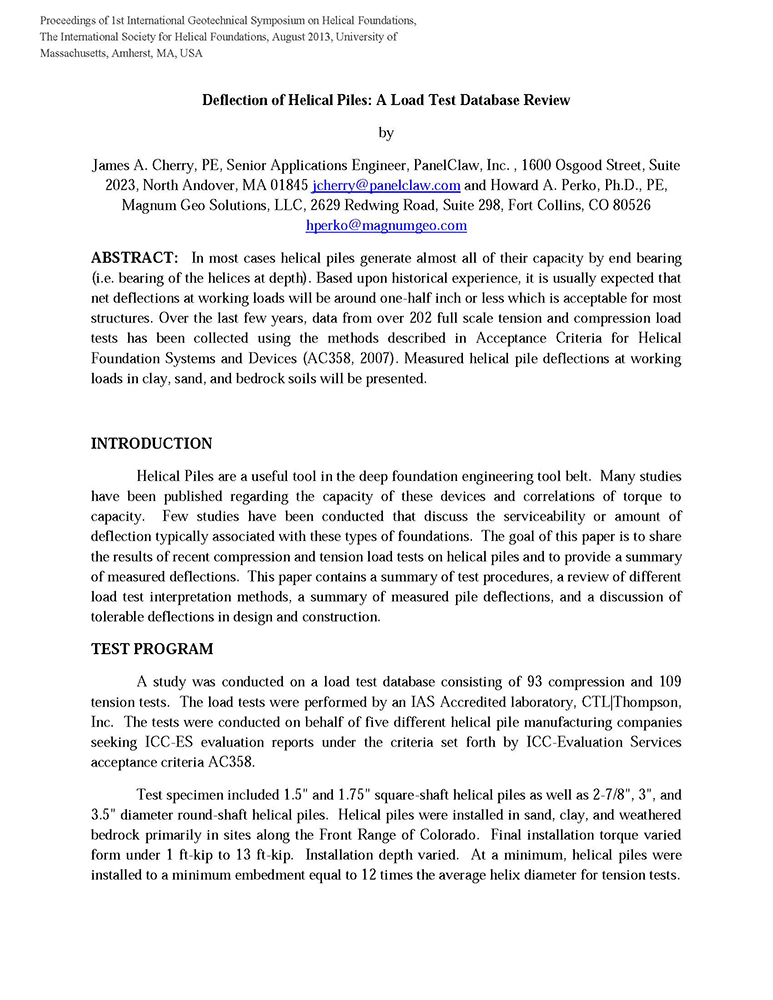
Load test data from over 200 full-scale tension and compression tests highlights how helical piles perform under real-world conditions. Across a range of soil types—including clay, sand, and weathered bedrock—results show that helical piles achieve capacity through bearing at the helix plates, with typical deflection at working loads around one-half inch or less—well within acceptable limits for most structures.
The study reinforces the reliability of helical piles when proper installation depth and torque are achieved. With consistent, predictable performance and controlled movement, they remain a practical solution for projects requiring efficient installation and dependable foundation support.
#HelicalPiles #DeepFoundations #FoundationSolutions #LoadTesting #Construction #SteelFoundations
Description
Deflection of Helical Piles: What Load Testing Shows
Load test data from over 200 full-scale tension and compression tests highlights how helical piles perform under real-world conditions. Across a range of soil types—including clay, sand, and weathered bedrock—results show that helical piles achieve capacity. They achieve this through bearing at the helix plates. Typical deflection at working loads around one-half inch or less—well within acceptable limits for most structures.
The study reinforces the reliability of helical piles when proper installation depth and torque are achieved. With consistent, predictable performance and controlled movement, they remain a practical solution for projects requiring efficient installation and dependable foundation support.
#HelicalPiles #DeepFoundations #FoundationSolutions #LoadTesting #Construction #SteelFoundations