Energy Method for Predicting Torque
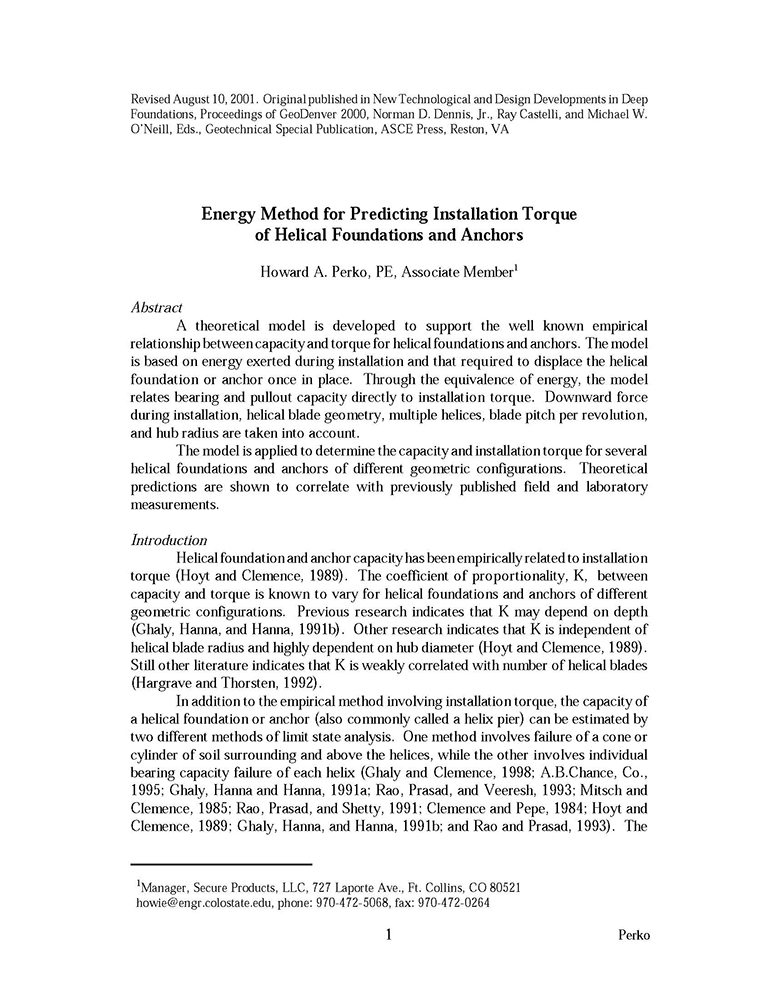
This study introduces an energy-based method for understanding the relationship between installation torque and the performance of helical foundations and anchors. By analyzing the energy required to install and advance the helix into the ground, the model connects torque directly to load-carrying capacity-providing a more refined approach than traditional empirical correlations.
The method accounts for key factors such as helix geometry, multiple helices, pitch, and shaft dimensions, offering a more complete picture of how these elements influence performance. Results show strong agreement with field and laboratory data, reinforcing torque as a reliable, practical indicator for achieving consistent and predictable foundation behavior in a wide range of conditions.
#HelicalPiles #FoundationSolutions #InstallationTorque #DeepFoundations #Construction #SteelFoundations
Description
Energy Method for Predicting Torque
This study introduces an energy-based method for understanding the relationship between installation torque and the performance of helical foundations and anchors. By analyzing the energy required to install and advance the helix into the ground, the model connects torque directly to load-carrying capacity—providing a more refined approach than traditional empirical correlations.
The method accounts for key factors such as helix geometry, multiple helices, pitch, and shaft dimensions, offering a more complete picture of how these elements influence performance. Results show strong agreement with field and laboratory data, reinforcing torque as a reliable, practical indicator for achieving consistent and predictable foundation behavior in a wide range of conditions.
#HelicalPiles #FoundationSolutions #InstallationTorque #DeepFoundations #Construction #SteelFoundations